Pick up and Drop
Service Available

Proper positioning is important when children undergo a pediatric X-ray examination because it influences how clearly the required body parts appear in the final image. Unlike adults, children may find it difficult to remain still, follow instructions or maintain a particular posture during imaging. Younger patients may also feel uncomfortable in an unfamiliar diagnostic environment, making careful guidance essential. The radiography team considers the child’s age, physical development and examination requirements before selecting a suitable position. Correct alignment during a pediatric x-ray helps reduce movement-related blurring, unnecessary rotation and overlapping structures, allowing doctors to assess the images more effectively. It can also minimise avoidable repeat exposures when the initial image does not provide sufficient diagnostic information. Whether a child requires chest imaging or an examination for a suspected injury, appropriate positioning supports clearer images, better assessment and a more comfortable imaging experience.
A child’s chest contains several important structures, including the lungs, heart and surrounding bones. During a pediatric chest xray, the way the child stands, sits or lies down can influence how these structures appear on the final image.
For instance, if a child is rotated during imaging, the chest may appear asymmetrical. Similarly, movement or an unsuitable angle can make certain details more difficult to assess. These differences matter when doctors are investigating respiratory symptoms, suspected infections or other chest-related concerns.
A properly positioned Chest X-ray for children helps the radiologist assess the visible anatomy more effectively. Depending on the child’s age and clinical condition, the required position and number of images may vary. The radiographer follows the requested examination protocol rather than expecting every child to maintain an identical position.
An examination that takes only a short time for an adult may require additional preparation when the patient is a young child. Infants cannot follow verbal instructions, while toddlers may move unexpectedly or become uncomfortable in unfamiliar surroundings.
During an X-ray for infants and toddlers, the radiology team may need to adapt its approach according to the child’s age, mobility and examination requirements.
Some common challenges include:
Parents can help by explaining the examination in simple words and bringing a familiar comfort item if permitted. A calm approach can make the experience easier without creating unnecessary fear.
One concern parents commonly have is whether their child will need multiple X-ray images. Sometimes additional views are medically necessary because doctors need to examine a particular structure from another angle. However, repeating an image because of avoidable movement or poor positioning is something imaging teams aim to minimise.
During Pediatric radiology imaging, correct alignment helps ensure that the required area is included and visible. This is particularly important when examining small anatomical structures or assessing a specific injury.
Good positioning also supports radiation protection. Children’s bodies are still developing, so imaging protocols should be adjusted to their size and clinical requirements. Radiation safety in pediatric X-rays involves more than positioning alone; it also includes choosing an appropriate examination, using suitable exposure settings and avoiding unnecessary images.
Parents should understand that additional images are not automatically a sign of an error. Sometimes they are needed to answer the doctor’s clinical question accurately.
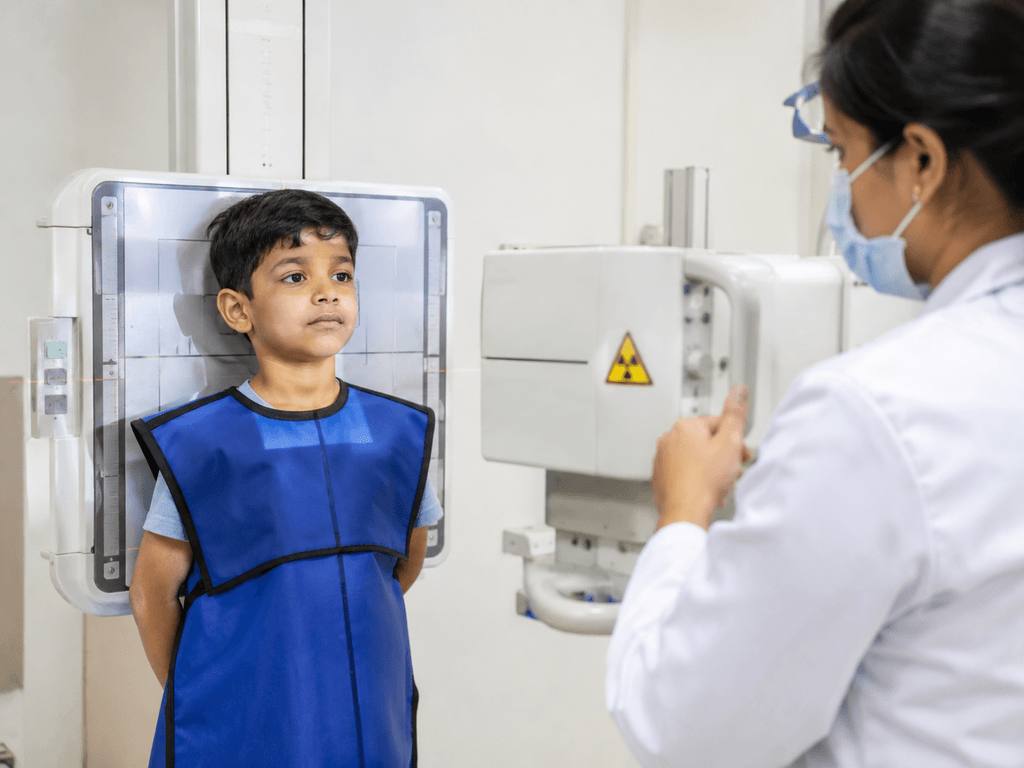
Chest imaging has an additional challenge because breathing changes the appearance of the lungs and surrounding structures. Depending on the child’s age and ability to cooperate, the radiographer may provide simple breathing instructions before capturing the image. Following these instructions can help obtain a clearer view of the chest and support proper image assessment.
In Children’s chest radiography, the timing of exposure can influence how well the lungs and other chest structures are displayed. Older children may be able to follow instructions, whereas infants and younger toddlers require an age-appropriate approach. A Pediatric lung X-ray may be requested when a doctor needs to investigate certain respiratory symptoms or examine a suspected abnormality. Parents looking for an X-ray centre in Dehradun can consider Semwal Diagnostics Centre for their child’s imaging requirements. However, the image must always be interpreted alongside the child’s medical history and clinical findings, as not every cough, fever or breathing complaint requires an X-ray.
Parents often focus on the appointment and report, but a little preparation can make the examination more comfortable.
Before visiting a diagnostic centre, consider the following:
During Pediatric diagnostic imaging, children should receive instructions appropriate to their age and understanding. Parents should also follow the radiographer’s directions about their presence in the examination room and any protective measures required.
A children’s imaging examination requires attention to more than the machine and exposure settings. The examination should be appropriate for the doctor’s request, the child’s age and the body area being investigated. Clear communication also helps parents understand why a particular view is needed and what will happen during the procedure.
When selecting an X-ray centre in Dehradun, parents can ask about pediatric imaging availability, examination preparation, radiation-safety practices and report arrangements. These details help families make an informed choice instead of selecting a centre based only on convenience.
Semwal Diagnostics Centre provides a diagnostic setting where parents can enquire about children’s imaging requirements and the preparation needed for their appointment. Whether a doctor has requested a routine children’s X-ray examination or a chest study, discussing the child’s age, mobility and medical requirements beforehand can help the team plan the examination appropriately.
Families looking for an OPG dental X-ray centre in Dehradun should also confirm the availability of dental panoramic imaging, as it is a separate examination from chest and general pediatric radiography.
A child’s position during an X-ray can influence how clearly the required anatomy appears and whether the image provides enough information for medical assessment. Movement, rotation and difficulty following instructions are common challenges, particularly among younger children. Appropriate positioning, age-specific guidance and radiation-safety practices help make the examination more effective. Before arranging a pediatric X-ray, parents can discuss their child’s requirements with Semwal Diagnostics Centre to understand the imaging process and prepare for the appointment.